
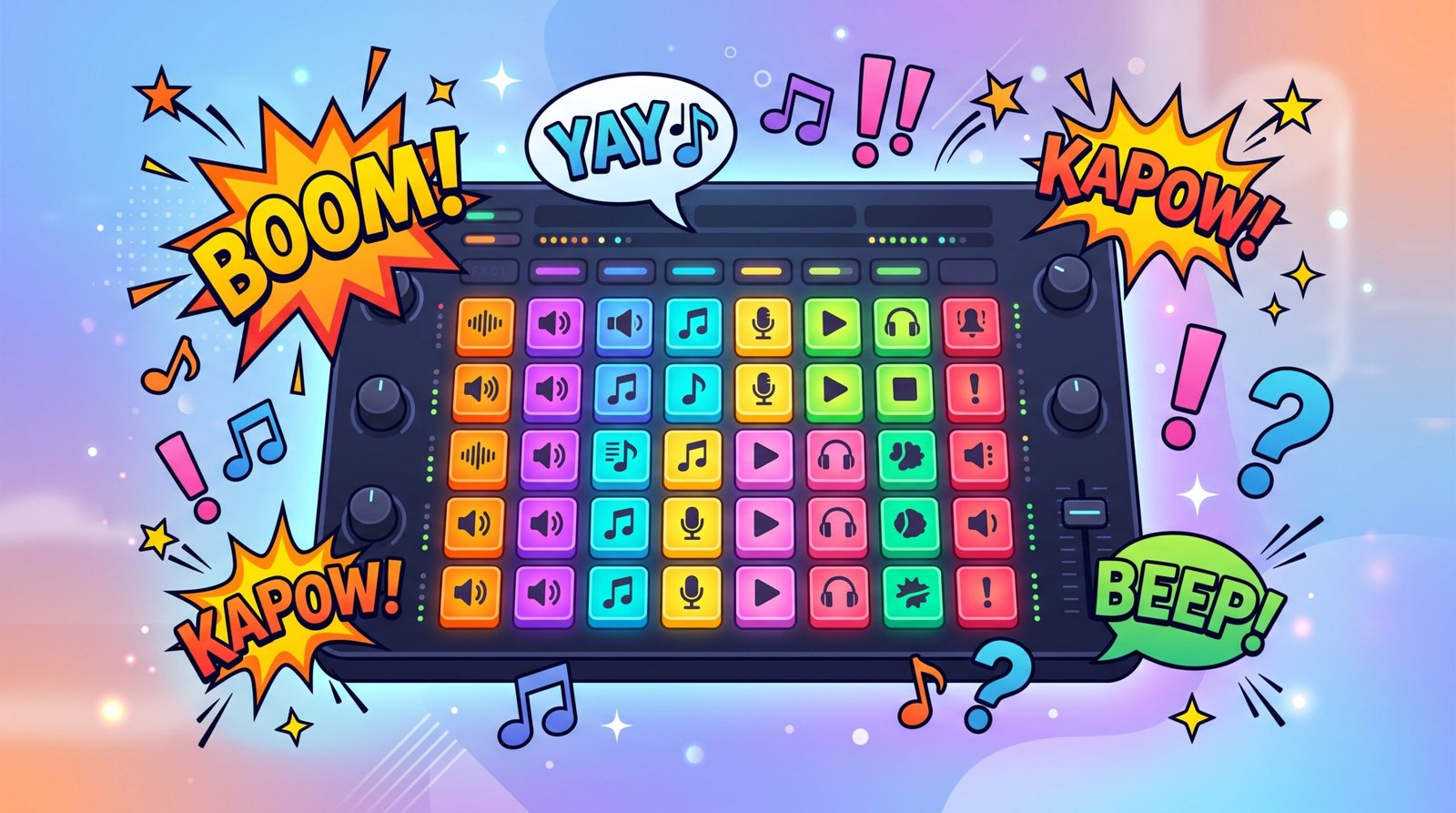
If you’ve spent any time on TikTok, YouTube Shorts, or Discord, you’ve heard them even if you didn’t know their names: the deep “bruh,” the dramatic boom, the cartoonish “oh no.” These are meme sounds — short audio clips that have become just as central to internet humor as the images and videos they accompany. This guide covers what meme sounds are, the most popular ones right now, and how to find a good meme soundboard to start using them yourself.
What Are Meme Sounds?
A meme sound is a short, instantly recognizable audio clip — usually a few seconds long — that’s been pulled from a video, show, song, or recording and repurposed as a comedic or reactive cue. They work the same way image memes do: a piece of media gets stripped from its original context and turned into a flexible punchline that anyone can drop into their own content.
What makes a sound “memeable” usually comes down to a few things:
- It’s short and punchy. Most iconic meme sounds are under three seconds.
- It carries a clear emotional beat — shock, comedic timing, dramatic tension, or absurdity.
- It’s flexible. The best ones work in dozens of unrelated situations, not just the one they came from.
- It’s easy to recall. You hear it once and you can pick it out of a crowd a month later.
Meme sounds spread through a fairly predictable pipeline: a clip blows up on TikTok, gets adopted by YouTube Shorts creators within days, and within a few weeks shows up packaged into Discord and streaming soundboards. By the time a sound feels “everywhere,” it’s usually already on its second or third life as a remix or mashup.
Popular Meme Sounds Right Now
Meme audio trends move fast, but a handful of sounds have proven to be genuinely evergreen, while others rotate in and out with the season. Here’s a mix of both:
The classics that never die:
- Vine Boom — the deep, percussive “boom” used for comedic impact or dramatic reveals. Still one of the most-used sound effects in short-form video, years after Vine itself shut down.
- Bruh sound effect — a flat, deadpan “bruh” used to punctuate disbelief or disappointment.
- Emotional Damage — Steven He’s clip of someone delivering devastating news with theatrical flair, now used for everything from academic stress to grocery prices.
- Airhorn — the classic hip-hop sound effect used to “hype up” or mock a moment.
- The Wilhelm Scream — a decades-old stock scream effect that’s become a running joke in editing communities.
What’s trending lately:
- Reaction sounds tied to slang like “rizz,” often layered into dating or confidence-themed content.
- Remixed or “lofi” versions of older classics (a chill, slowed-down Emotional Damage, for instance).
- Regional viral sounds — clips from Vietnamese livestreams, Australian creators, or Indian TikTok have been crossing over into global use.
- Cartoon-style footstep and chase sounds, often layered with a comedic “thud” or fart sound for extra effect.
A useful rule for creators: pair high-energy sounds (like a boom or scream) with otherwise boring or static footage for a “jump scare” comedic effect, and use slower, lofi remixes against fast or chaotic footage for ironic contrast. Layering two sounds together — like footsteps followed by a reverb-heavy effect — is also a common trick for doubling the comedic punch.
What Is a Meme Soundboard?
A meme soundboard is a web page or app that organizes meme sounds into clickable buttons, so you can preview, play, and download clips instantly without digging through video archives yourself. Most soundboards let you:
- Browse sounds by category, trend, or theme (classic memes, TikTok sounds, gaming clips, etc.)
- Search by name or keyword
- Play a clip with one click
- Download the audio file for use in your own videos
- Assign sounds to hotkeys so you can trigger them live while streaming or recording
Soundboards are popular with several different crowds: video editors who need quick sound effects, Discord users who want a “soundboard bot” for voice channels, Twitch streamers reacting live, and casual users who just want to mess around with friends.
How to Use Meme Sounds Effectively
If you’re adding meme sounds to your own content, a few practical tips go a long way:
- Balance your volume. A meme sound effect should generally sit slightly louder than your background music or dialogue — enough to land the joke without clipping the audio.
- Match the timing to the punchline. The sound should hit exactly when the visual gag does, not a beat before or after.
- Don’t overload a clip. One or two well-placed sounds beat a video stuffed with five different effects competing for attention.
- Keep an eye on what’s current. Meme sounds old fast — a sound that was everywhere six months ago can feel stale today, so refreshing your go-to list regularly helps.
Where to Find Meme Sounds
There’s no shortage of places to track down meme sounds and soundboards. Dedicated soundboard sites let you browse by category and trigger clips instantly. Royalty-free sound effect libraries are a good option if you plan to use clips in monetized content and want to avoid copyright issues. YouTube has countless “top sound effects” compilation videos that double as a quick way to preview a batch of trending clips at once. And TikTok’s own sound search is often the fastest way to catch a meme sound while it’s still on the rise, before it’s even made it onto a standalone soundboard.
The Bottom Line
Meme sounds have become a genuine layer of internet language — a shared shorthand that doesn’t need translation to land. Whether you’re editing videos, building out a Discord soundboard, or just want a quick laugh, knowing the most popular meme sounds (and where to find a solid meme soundboard) makes it a lot easier to keep up with how fast internet humor moves.